Demystifying the Magic: A Technical Deep Dive into Generative AI
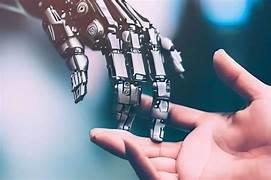
Welcome to the wondrous world of generative AI, where machines don't just analyze, they create. Imagine a digital paintbrush wielded by an algorithm, a composer crafting symphonies with lines of code, or a writer conjuring stories from the depths of data. This is the realm of generative AI, and it's
Welcome to the wondrous world of generative AI, where machines don't just analyze, they create. Imagine a digital paintbrush wielded by an algorithm, a composer crafting symphonies with lines of code, or a writer conjuring stories from the depths of data. This is the realm of generative AI, and it's rewriting the rules of what technology can do.
Gone are the days of AI solely crunching numbers or mimicking human speech. Generative AI is pushing the boundaries, breathing life into new forms of content. From breathtakingly realistic images to original pieces of music and poetry, the possibilities seem endless.
But what exactly is this magic at work? Generative AI models learn from vast amounts of existing data, like paintings, music, or text. They analyze patterns, relationships, and the very essence of what makes something "real." Then, armed with this knowledge, they embark on a journey of creation, spinning novelties from the threads of the familiar.
The Rise of GAI
Unlike traditional AI machine learning models, which recognize patterns in the training data and learn to make predictions, classify things, offer personalized recommendations, or help in decision-making, GAI can create new content quickly on the fly based on a prompt (input) from the user. For example, it can write a short essay, answer a question, generate code, synthesize a new drug, summarize text, create a new image, or synthesize music. As a result, it can support and facilitate the development of several game-changing applications and transformations in several domains. Hence, the field of GAI is generating significant interest not only from general users, educators, and researchers but also from global media and commentators.
Excitement and hype in GAI are high, and over 275 big tech companies and startups are driving GAI forward. The AI arms race is on. As a result, GAI is poised to usher in a new era of GAI-driven applications we had never envisaged possible, at least so soon.
Chatbots
A form of GAI, a chatbot is a conversational virtual assistant. Major tech companies have been working on LLMs that drive GAI and AI-enabled chatbots for a long time. However, only now they are advanced enough to be deployed for public use.
ChatGPT
Launched in November 2022, OpenAI’s ChatGPT is a conversational text-writing chatbot built on its updated version of LLM GPT. A transformer is a deep learning model that selectively concentrates on discrete aspects of information, differentially weighting the significance of each part of the input data. ChatGPT is essentially a user interface for the LLM GPT-3 (the third version of the GPT), which has 175 billion parameters and a massive 600 GB of data, gathered from books, newspapers, reports, research papers, and online sources in 2021.
Since its launch, ChatGPT has generated a tsunami of interest and become the fastest-growing app in human history, reaching an estimated 100 million active users in just two months. It attracted an average of 13 million unique daily users in January of this year. Yet, despite its popularity and the hype surrounding it, it has significant limitations. For example, it can even make factual errors, fabricate answers, and give invalid responses, which raise several concerns among many.
LaMDA, Bard, and Pathways Language Model
Google’s LaMDA, released in May 2022, is a large natural language model trained on over 1.56 trillion words of conversation data and online pages using the transformer architecture. LaMDA has 137 billion parameters and drives Google’s chatbot Bard and AI search engine. Its Pathways Language Model (PaLM) is expected to be bigger than LaMDA and ChatGPT. Google shared its perspective on the growth of AI and why it was taking a careful approach to roll out PaLM.
Sparrow
DeepMind’s Sparrow is a chatbot trained on text data scraped from the Internet and optimized for dialogue. It is expected to be available for a private beta in 2023. It leverages reinforcement learning with human feedback and is likely to offer safer responses than its nonreinforced counterparts, with less bias and discrimination
YouChat 2.0
In February 2023, search engine startup http://you.com/ launched a new multimodal conversational AI system called YouChat 2.0, which promises to offer a unique and interactive experience with each query. Based on its blended LLM known as Chat, Apps, and Links, YouChat 2.0 can present charts, images, videos, tables, graphs, text, or code in its responses to user queries.
AI Art Tools
Several LLM-based tools such as DALL-E 2, Stable Diffusion, Imagen, and Parti can create images and paintings responding to the user’s text prompt in natural language. In addition, Shutterstock, a popular online source of stock photos and illustrations, in partnership with OpenAI, has launched its GAI Image Tool based on DALL-E, which is accessible to its paid customers.
ADD-ONs and Extensions
Within months of the introduction of ChatGPT, several valuable add-ons and extensions to ChatGPT, such as GraphGPT, Codex, Humata, and ChatBCG, have arrived.
GraphGPT
GraphGPT converts unstructured natural language into a knowledge graph providing a structure and a graph visualization of entities and their relationships in a given text. The text could be a passage from a web page, book, conversation, or video transcript. GraphGPT can generate updatable, complex, directed graphs.
Codex
OpenAI’s Codex is an AI-powered code writer cum editor and generates a solution code for a problem described in natural language as input. It can also explain program code, translate code between programming languages, and perform other programming-related tasks. Alphacode, AI Code Reviewer, AI Data Sidekick, and Figstack are other AI tools helpful to programmers.
Humata
Humata is a chatbot that lets you upload a PDF document (up to 60 pages long) and answers your questions about the document in simple English. It can instantly turn complex articles into easily understandable summaries, generate insights, and immediately give easy-to-understand answers to questions (prompts) related to your document and cite the page for each answer.
BioGPT
Microsoft’s BioGPT is a domain-specific chatbot based on a transformer language model tailored for answering biomedical questions. It was trained using only biomedical articles from PubMed, published before 2021.
Generative AI works by learning the "language" of its domain, building an internal representation of that language, and then using that knowledge to creatively predict and generate new elements, ultimately resulting in original and often impressive outputs.
Research and development
GAI will have significant implications for research, creating both opportunities and concerns. For instance, GAI can help researchers summarize the literature, identify research gaps, understand concepts in other domains they can embrace, improve their papers, write software for analysis and simulation, and even help with designing experiments. They are likely to revolutionize research practices, accelerate innovation, make science more equitable, and increase the diversity of scientific perspectives. However, if not used ethically and professionally, they could also harm research quality, transparency, and creativity and raise concerns about publications. Several issues on the implications of GAI on research and development need further discussion among stakeholders.
Addressing Tech-Driven Educational Crisis
Education is facing a tech-driven crisis as students and teachers across the globe are beginning to embrace disruptive GAI tools such as ChatGPT. Educators need to recognize that GAI can help students to learn and write better, assist teachers, and help in research and discovery, but it can also help one to cheat. Moving forward, we must consider ways to augment learning, teaching, and research using GAI rather than curb its use. It seems futile to fight against the educational use of AI tools. Instead, we must integrate GAI’s various offerings meaningfully into teaching and learning and remodel student learning objectives and assessments.
A Look Ahead
Chatbots and other AI-supported content creators are rapidly evolving despite being in their early stages. As they evolve, they will improve sophistication, offer new features, and overcome limitations. This disruption will significantly impact the future of content creation and have a profound effect.
In the future, education at all levels will be AI-enabled, and GAI will play significant roles in all aspects of education. Educational institutions and academics will innovatively embrace new tools and technologies and address the concerns. Learners will increasingly use AI-enabled tools, even if some institutions ban them. This is an opportune time to rethink and reshape teaching, learning, writing, assessment, and research.
Like it or not, GAI will advance further and be a game changer in many ways. So, let us remain optimistic and be tuned to embrace a GAI-driven future effectively.

 Let's talk about your next project!