UGC Marketing: How Brands Are Turning Customers Into Content Creators
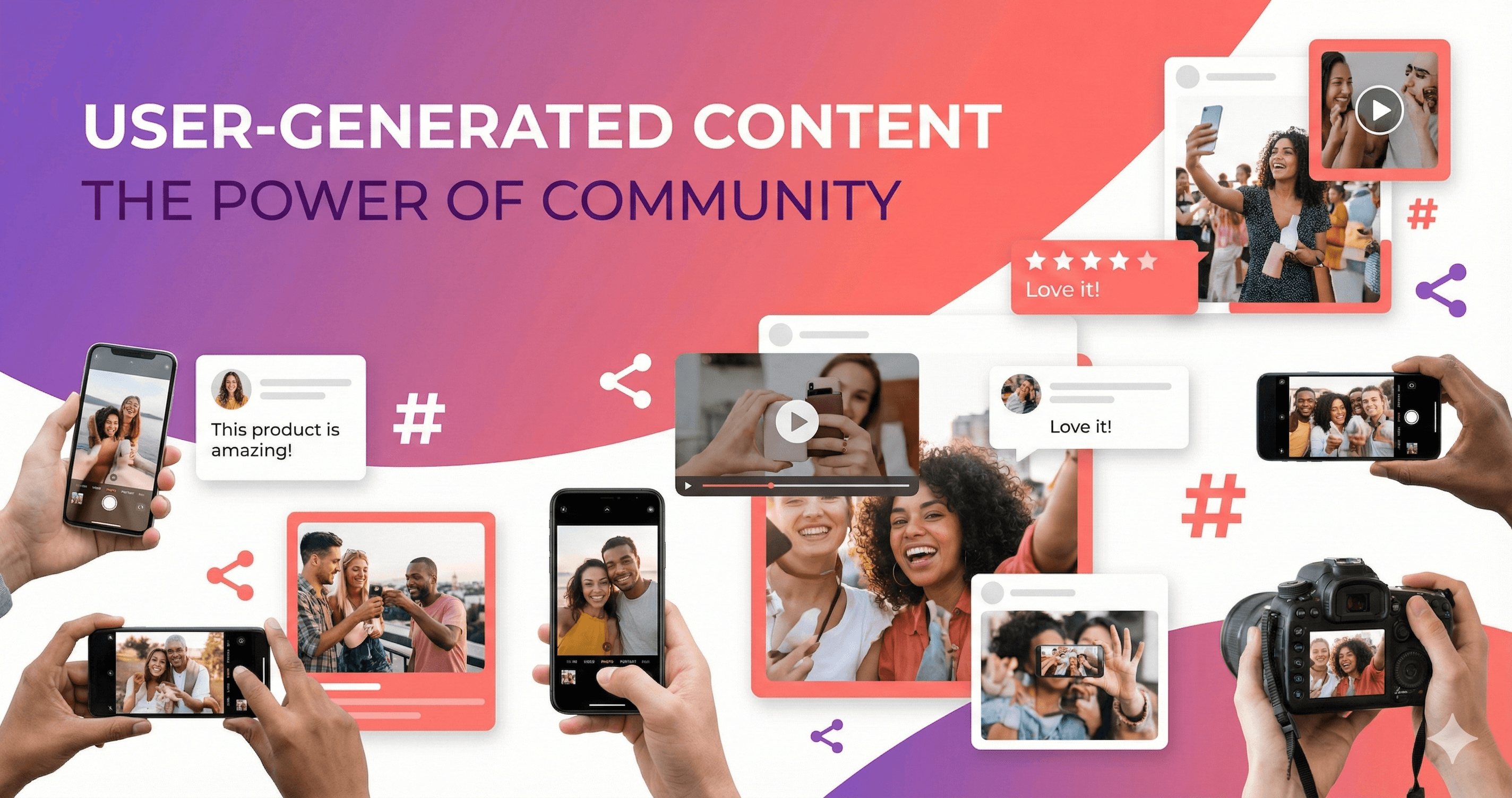
User-generated content has become the most trusted form of brand marketing. Learn how leading brands are building systematic UGC programs that generate authentic content at scale while building passionate customer communities.
UGC Marketing: How Brands Are Turning Customers Into Content Creators
User-generated content (UGC) has evolved from a nice-to-have marketing bonus to a strategic imperative. In 2025, consumers trust content from other customers 2.4 times more than brand-created content. Here's how smart brands are building UGC engines that generate authentic content at scale.
Understanding the UGC Advantage
Before diving into strategy, it's crucial to understand why UGC outperforms traditional brand content:
Trust factor: 92% of consumers trust recommendations from people they don't know over branded content. UGC feels authentic because it is authentic.
Cost efficiency: UGC reduces content production costs significantly. Instead of expensive photo shoots and video production, your customers create content as part of their natural behavior.
Volume and variety: A systematic UGC program can generate hundreds or thousands of content pieces monthly, far exceeding what any internal team could produce.
SEO and social proof: UGC generates natural keywords, reviews, and social signals that improve search rankings and conversion rates.
Building a UGC-First Strategy
Successful UGC programs don't happen by accident. They require intentional design:
Step 1: Create Share-Worthy Moments
Your product or experience must be inherently shareable. Audit your customer journey for "Instagram moments":
- Unboxing experiences with premium packaging
- Visually distinctive product design
- Memorable in-store or dining environments
- Unexpected delights that surprise customers
- Transformation results that customers want to show off
If customers aren't naturally compelled to share, no amount of asking will generate quality UGC.
Step 2: Remove Friction from Sharing
Make it effortless for customers to create and share content:
- Display branded hashtags prominently
- Provide good lighting in physical locations
- Offer "photo spots" with branded backdrops
- Include share prompts in post-purchase emails
- Create AR filters and digital tools for content creation
Step 3: Incentivize Without Corrupting Authenticity
Incentives can boost UGC volume, but heavy-handed approaches feel transactional:
Effective incentives:
- Feature customers on your main brand channels
- Offer exclusive access or early product launches
- Create loyalty program points for content
- Run contests with meaningful prizes
- Provide discount codes for future purchases
Avoid: Paying for specific positive reviews or mandating certain messaging. This destroys the authenticity that makes UGC valuable.
The UGC Content Flywheel
The most successful brands create self-sustaining UGC ecosystems:
1. Customer creates content organically
2. Brand discovers and engages with content
3. Customer feels recognized and valued
4. Customer creates more content
5. Other customers see recognition and participate
6. Cycle accelerates
The key is consistent, genuine engagement with customer content—not just reposting, but commenting, sharing to stories, and building relationships.
UGC Across the Customer Journey
Strategic brands deploy UGC at every stage:
Awareness: Customer testimonials and real-life usage in ads
Consideration: Reviews and comparison content on product pages
Purchase: Social proof widgets showing recent purchases
Post-purchase: Encourage sharing with packaging inserts
Advocacy: Ambassador and referral programs
UGC Rights Management
Using customer content requires proper permissions:
Best practices:
- Always ask permission before reposting
- Create clear terms for hashtag campaigns
- Use UGC platforms that manage rights automatically
- Credit creators appropriately
- Maintain organized records of permissions
Many brands use tools like TINT, Stackla, or Yotpo to manage UGC rights and curation at scale.
Curating Quality UGC
Not all UGC is equal. Develop curation criteria:
- Visual quality (lighting, composition, clarity)
- Brand alignment (tone, values, aesthetic)
- Authenticity (genuine use, not staged)
- Diversity (different customers, use cases, demographics)
- Story potential (compelling narrative or emotion)
Create a review workflow where UGC is evaluated, tagged, and organized for different uses.
UGC for Paid Advertising
UGC often outperforms polished brand creative in paid campaigns:
Winning UGC ad formats:
- Customer testimonial videos
- Before/after transformation content
- Unboxing and first impression reactions
- Product comparison reviews
- Day-in-the-life usage content
UGC ads typically see 4x higher click-through rates and 50% lower cost-per-acquisition compared to traditional creative.
Building Brand Ambassador Programs
Formalize your best UGC creators into ambassador programs:
Ambassador program structure:
- Application process to select aligned creators
- Clear expectations and content guidelines
- Regular product seeding and early access
- Exclusive community and events
- Performance tracking and tiered rewards
- Long-term relationship focus over one-off campaigns
Ambassadors become extensions of your marketing team, creating consistent content and advocating within their communities.
Measuring UGC Program Success
Track these metrics to evaluate your UGC program:
- Volume: Number of UGC pieces created monthly
- Quality: Percentage meeting curation standards
- Engagement: Performance of UGC vs. branded content
- Conversion: Impact on sales when UGC is present
- Cost: Content acquisition cost vs. traditional production
- Reach: Aggregate reach of customer content
Common UGC Mistakes to Avoid
- Ignoring customer content and not engaging
- Over-curating to the point of losing authenticity
- Using UGC without permission
- Only showcasing perfect customers (lacks diversity)
- Treating UGC as free labor rather than partnership
- Not having clear brand guidelines for creators
Conclusion
UGC marketing in 2025 is about building systems that consistently generate authentic customer content while fostering genuine community. Brands that master UGC don't just reduce their content production costs—they build armies of advocates who market their products more effectively than any internal team could.
Start by auditing your current UGC volume and quality, identify friction points in sharing, and build the infrastructure to discover, engage with, and deploy customer content across your marketing channels. The brands winning in 2025 understand that their best marketers are their customers.

 Let's talk about your next project!